
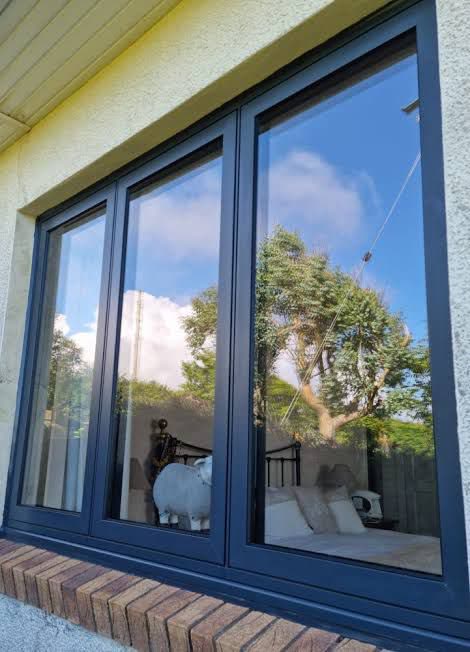
What is the actual difference between uPVC and aluminium windows?
The difference is the frame, not the glass. Both types hold the same kind of double glazed sealed unit, so most of what you notice day to day comes from how thick the frame is, how it is finished and what it costs.
- uPVC frames are made from multi-chambered plastic profiles. The chambers trap air, which is what makes the frame a good insulator. Colour comes from the material itself or from a foil finish, including woodgrain.
- Aluminium frames are metal, so they are much stronger for their size. That strength lets the frame be thinner. Because metal conducts heat, modern aluminium windows have a thermal break — a strip of insulating material (polyamide in the windows we fit) running through the middle of the frame. The colour is a powder-coated finish.
The Energy Saving Trust sums up the two in a line each: uPVC frames don’t need regular maintenance and can be recycled, and aluminium or steel frames are slim and long lasting and can be recycled. It also makes the point that matters most here: you can find high-performing windows in any of the main frame materials.
uPVC vs aluminium at a glance
| uPVC windows | Aluminium windows | |
|---|---|---|
| Price | Lower. The Energy Saving Trust notes PVC windows tend to be cheaper | Higher |
| Frame width | Thicker frame, slightly less glass | Slim sightlines, more glass |
| Minimum energy standard | 1.4 W/(m²·K) or Window Energy Rating Band B | Exactly the same |
| How it insulates | Multi-chambered profile | Thermal break through the frame |
| Colours (our range) | White, cream, black, anthracite grey and woodgrain foils | Powder coated in almost any RAL colour |
| Upkeep | Wipe with soapy water. No painting | Wipe clean. Hard-wearing powder coat |
| Large openings | Fine for standard window sizes | Stronger, so better for big panes |
| Best suited to | Whole-house replacements, traditional styles, tighter budgets | Modern extensions, large picture windows, a slim contemporary look |
Sources: Energy Saving Trust for cost and general material points, Approved Document L, Volume 1 for the energy standard, and our own range of colours and finishes.
Are aluminium windows colder than uPVC?
Not in any way the rules allow — and this is the point most comparison articles miss. Building Regulations set one minimum standard for a replacement window in an existing home in England, and it is the same whatever the frame is made of.
Approved Document L (Volume 1, Table 4.2) sets that standard at a maximum U-value of 1.4 W/(m²·K), or a Window Energy Rating of Band B as a minimum. Paragraph 10.3 of the same document applies it to new and replacement windows where the entire unit is provided. There is no easier figure for aluminium and no tougher one for uPVC.
Two things follow from that
- Compare the whole window, not the material. The energy rating label is run by the British Fenestration Rating Council (BFRC), which rates windows from A++ down to E using three factors together: heat loss, solar gain and air leakage. The Energy Saving Trust adds that the entire window, frame and glass, is assessed. So an A-rated aluminium window and an A-rated uPVC window have been measured on the same scale.
- The glass does a lot of the work. The Energy Saving Trust describes the most efficient glazing as low-emissivity (low-E) glass, with an inert gas such as argon between the panes and “warm edge” spacers that contain little or no metal. Those choices apply to both frame types.
Where the old reputation came from
Aluminium’s reputation as a cold frame comes from older windows made before thermal breaks were standard. If you are replacing draughty metal frames from decades ago, a modern aluminium window is a very different product.
Will one save more on heating bills than the other?
Savings follow the rating, not the frame material. The Energy Saving Trust estimates that fitting A-rated double glazing in an entirely single-glazed semi-detached home can save £85 a year in Great Britain and cut CO2 emissions by 290kg a year. That figure is for the upgrade from single glazing, and it is the same whether the A-rated windows are uPVC or aluminium.
Which costs more, uPVC or aluminium?
Aluminium costs more. The Energy Saving Trust notes that PVC windows tend to be cheaper, and that matches what we see on every quote we write.
“What’s your best price?” is the first question most of our customers ask, so here is a straight answer on how to think about it:
- If you are replacing every window in the house and the openings are standard sizes, uPVC gives you the most for your money. It is by far our most popular choice for that reason.
- If one or two openings are the feature of the house, such as a big picture window or the glazing in a new extension, that is where the extra cost of aluminium shows the most benefit.
- You do not have to pick one for the whole house — see the next section.
We do not publish a price list, because the figure depends on the sizes, styles and glass in your home. What we do is survey for free and give you one clear written price for each option, so you can see the real difference for your house rather than a rule of thumb.
Can you mix uPVC and aluminium in the same house?
Yes, and it is often the best-value answer. Nothing in the regulations asks for the frames to match. Each window or door simply has to meet the standard for its type.
A common approach is uPVC windows at the front and upstairs, where openings are standard sizes, and aluminium at the back where a wide opening or a wall of glass benefits from the slimmer, stronger frame. Aluminium is exceptionally strong, which is why it is the usual choice for large openings, and the bifold doors we supply come in aluminium or uPVC.
Three things to check if you mix
- Colour. Our uPVC range includes anthracite grey and black, and aluminium can be powder coated in almost any RAL colour. Ask to see samples of both side by side at the survey, because a foil finish and a powder coat can look slightly different in daylight even in the same shade.
- Sightlines. A slim aluminium frame next to a thicker uPVC one is noticeable on the same wall. It works best when the two materials are on different elevations.
- One installer, one quote. Keeping the whole job with one company means one survey, one set of measurements and one certificate.
Which looks better on a period or traditional home?
uPVC usually suits a traditional house better, and aluminium usually suits a modern one — but there are good exceptions both ways.
Leicester has plenty of Victorian and Edwardian terraces, and for those the style of window matters more than the material. A flush casement, where the opening sash sits flush with the frame, gives a clean, traditional timber look in low-maintenance uPVC. Sliding sash windows do the same job for homes that had sashes originally. Woodgrain foils help too.
Aluminium comes into its own on modern extensions and newer homes, where slim dark frames and bigger panes are the look people want. It can also work on period restorations, particularly where the original windows were slim metal frames.
Do I need planning permission to change the frame material?
Usually not. The Planning Portal says you do not usually need to apply for planning permission to insert new windows and doors that are of a similar appearance to those used in the construction of the house. There are exceptions:
- If the house is a listed building, you will need listed building consent for any significant works.
- In a conservation area or other designated area, there may be additional restrictions.
- Your council may have made an Article 4 Direction withdrawing permitted development rights.
- New windows in an upper-floor side elevation must be obscure-glazed and either non-opening or more than 1.7 metres above the floor level.
- A new bay window is treated as an extension and may need permission in its own right.
Check before you choose a colour
The Energy Saving Trust gives the same advice: check with your local planning office if you live in a conservation area, a listed building or a property with an Article 4 Direction. If any of those apply, speak to the council before you choose a material or a colour — a change from white frames to dark grey is exactly the kind of change in appearance they look at.
Which lasts longer and needs less maintenance?
Both are low maintenance, and neither needs painting. The Energy Saving Trust describes aluminium frames as long lasting and uPVC frames as not needing regular maintenance. In practical terms:
- uPVC will not rot or warp. A wipe with soapy water now and then is all it asks.
- Aluminium has an extremely hard-wearing powder-coated finish and also only needs wiping down.
How long a window lasts depends on more than the frame. The Energy Saving Trust says double glazed windows can last between 20 and 35 years if they are high quality, installed properly and well maintained — and sometimes longer. It lists the signs that a window is reaching the end of its life as condensation between the panes, discolouration, draughts, and difficulty opening and closing. So the quality of the product and the fitting matter at least as much as the choice between plastic and metal.
One more point that applies to both
Modern windows are more airtight than old ones, so replacement windows will usually have trickle ventilators. The Energy Saving Trust’s advice is to keep them open.
So which should you choose?
Choose on the opening, the look and the budget, in that order.
| If this sounds like you | Our honest suggestion |
|---|---|
| Replacing all the windows in a typical semi or terrace | uPVC |
| Period home and you want a traditional look | uPVC flush casement or sliding sash |
| New extension with large panes or a wide opening | Aluminium |
| You want the slimmest frames and the most glass | Aluminium |
| You want a specific colour that is not in a standard uPVC range | Aluminium (almost any RAL colour) |
| Tight budget but one feature opening at the back | uPVC throughout, aluminium for the feature opening |
Ask for these four things in writing
Whichever way you go, get all four on the quote, for each material you are comparing:
- The whole-window energy rating or U-value, not just the rating of the glass.
- The glass specification.
- The exact colour and finish, inside and out.
- That the Building Regulations certificate from a competent person scheme is included.
Frequently asked questions
Is uPVC cheaper than aluminium?
Yes. The Energy Saving Trust notes that PVC windows tend to be cheaper. How much cheaper depends on the sizes and styles in your home, so ask for both options to be priced on the same survey.
Are aluminium windows as energy efficient as uPVC?
They have to meet the same minimum standard. Approved Document L sets a maximum U-value of 1.4 W/(m²·K) or Window Energy Rating Band B for replacement windows, whatever the frame material. Compare the whole-window rating on each quote.
Can aluminium and uPVC windows be recycled?
Yes. The Energy Saving Trust states that uPVC frames can be recycled and that aluminium frames can be recycled.
Can I have aluminium bifold doors with uPVC windows?
Yes. It is a popular combination. Each product has to meet the standard for its own type, and the frames do not have to be the same material.
How long do new double glazed windows last?
The Energy Saving Trust says high-quality double glazed windows that are installed properly and well maintained can last between 20 and 35 years, and sometimes longer.
Not sure which is right for your home?
That is what the survey is for. We will measure every opening, show you both materials, and give you one clear written price for each so you can compare them properly. It is free, and there is no pressure to sign on the day.
Compare our uPVC windows and aluminium windows, or read our guide on how to choose a double glazing company in Leicester.